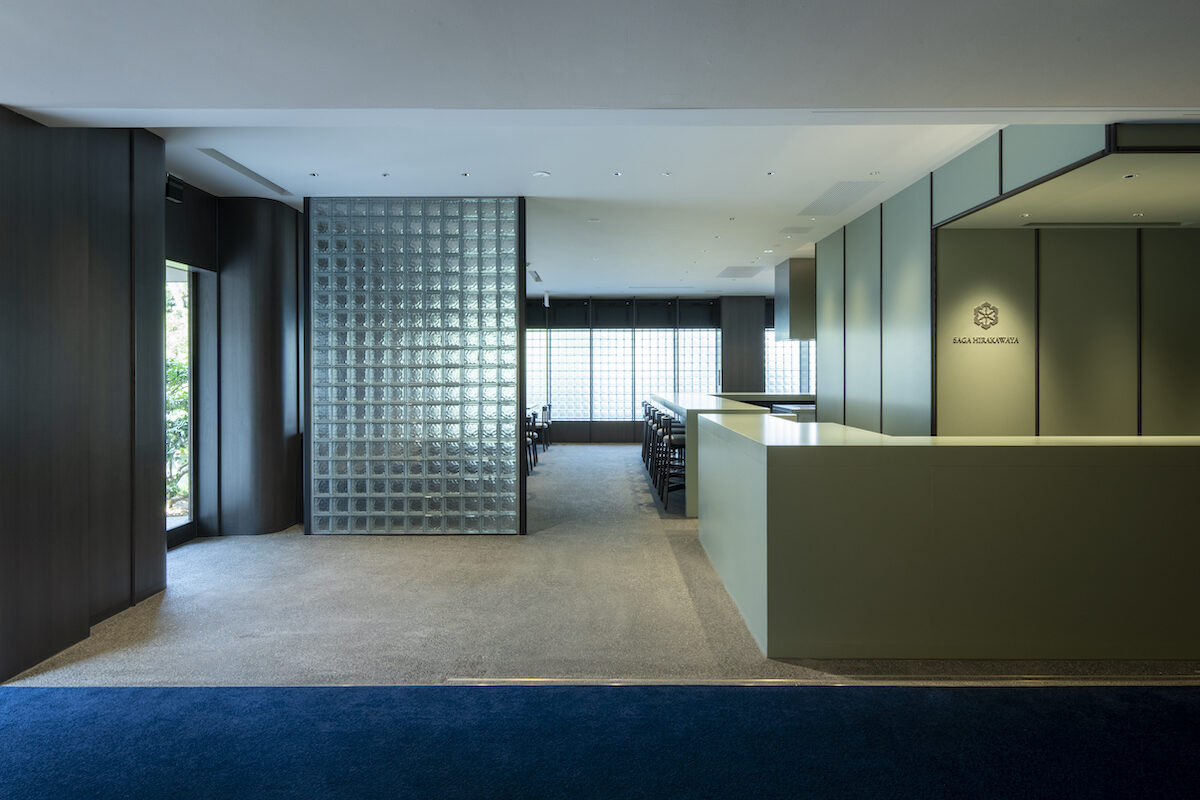
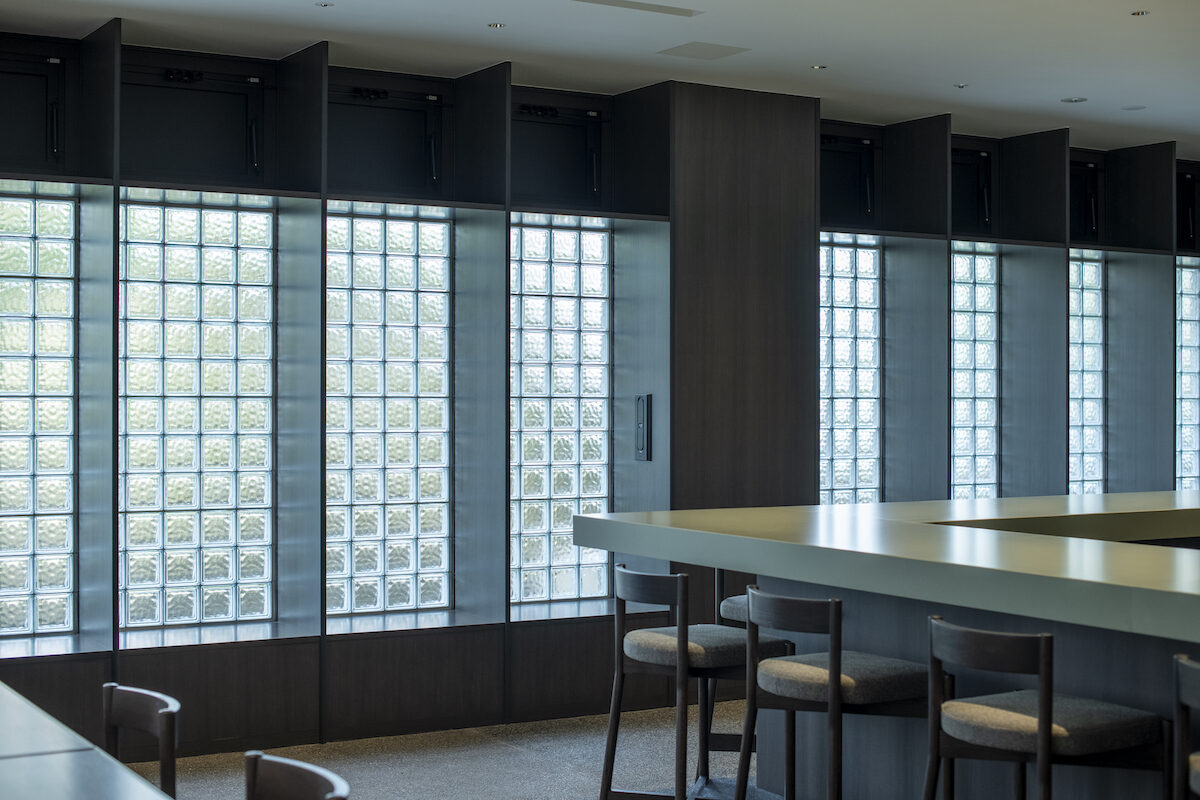
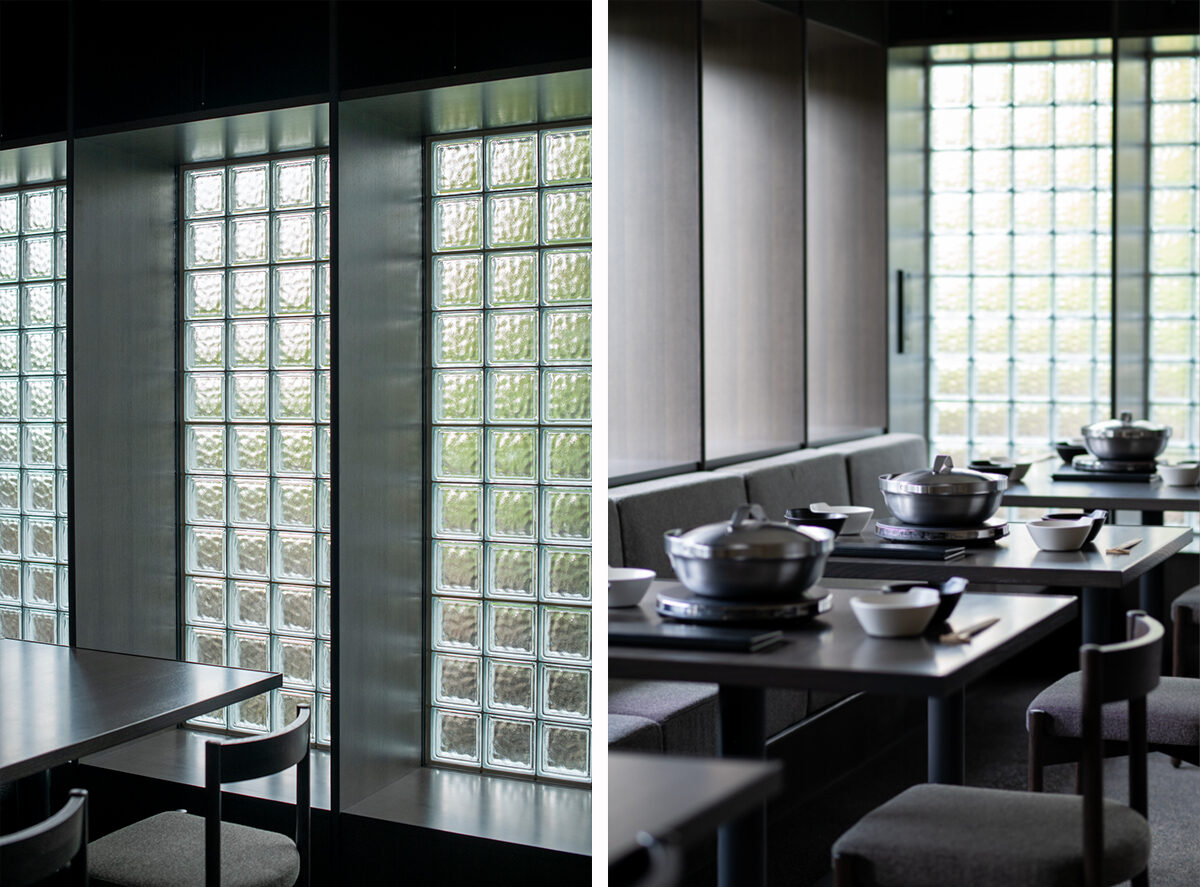
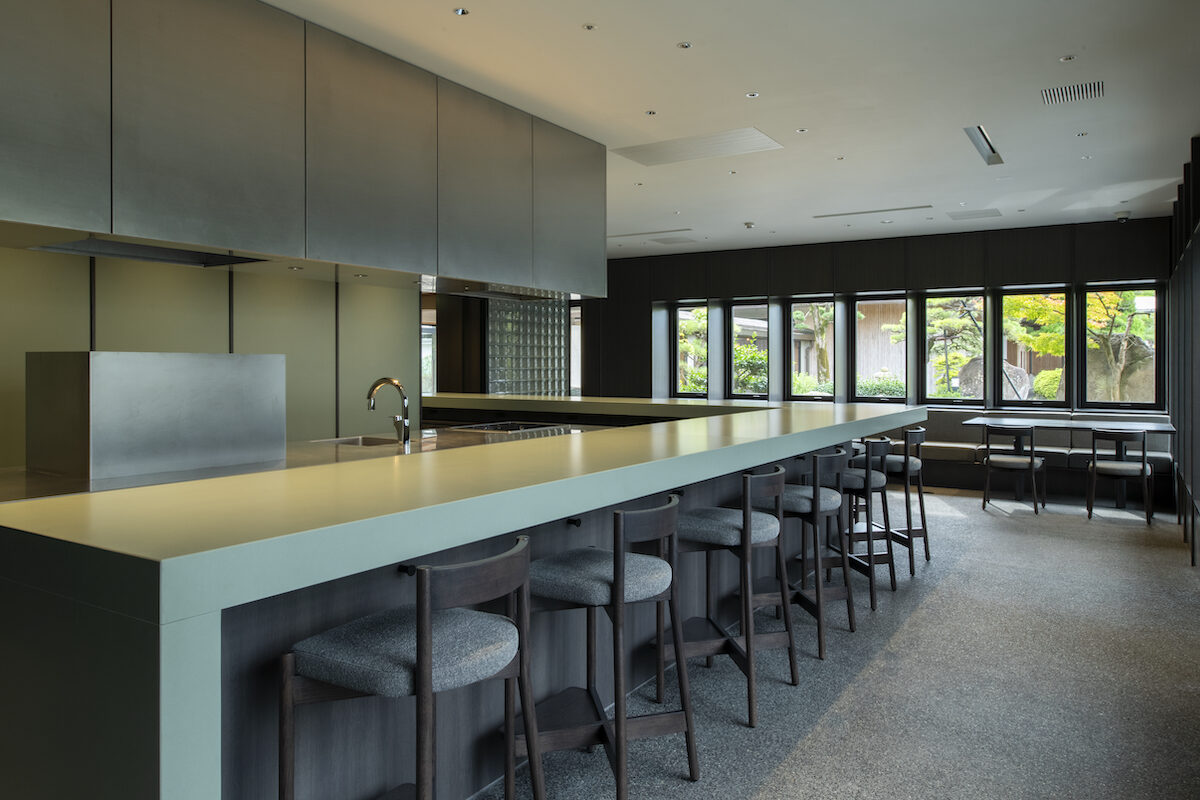
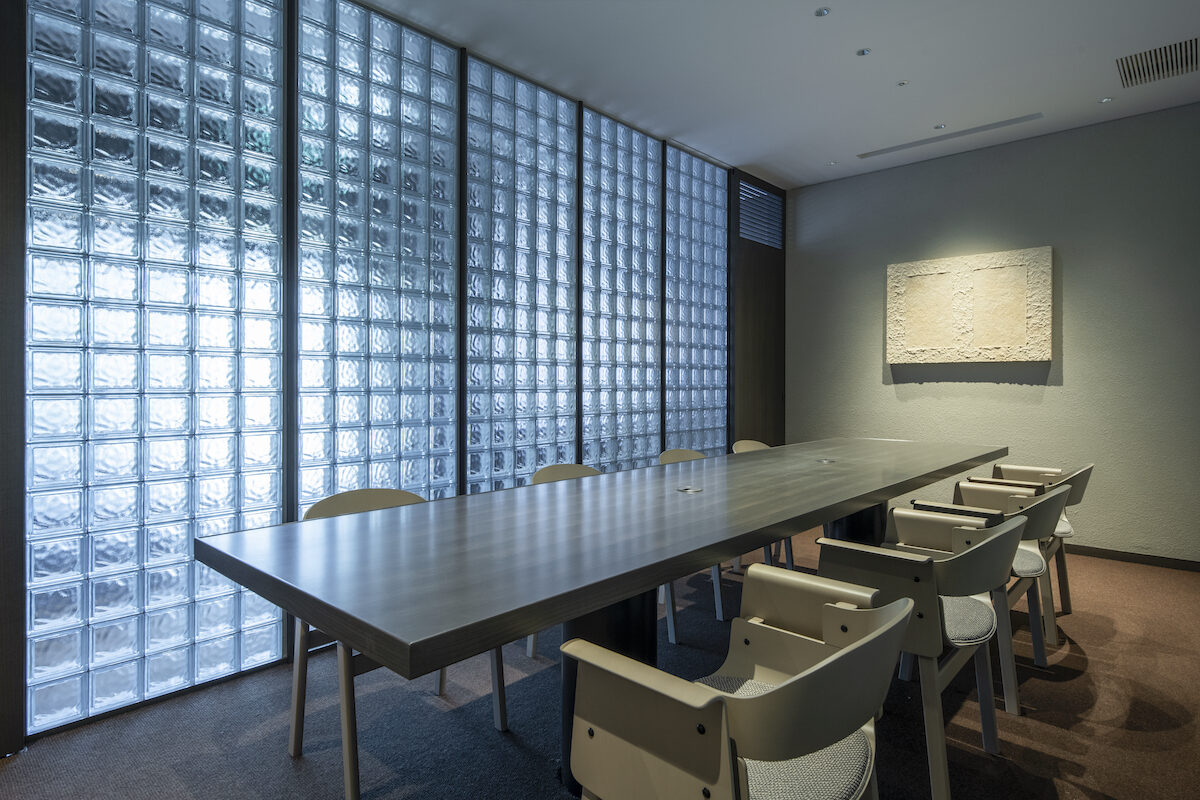
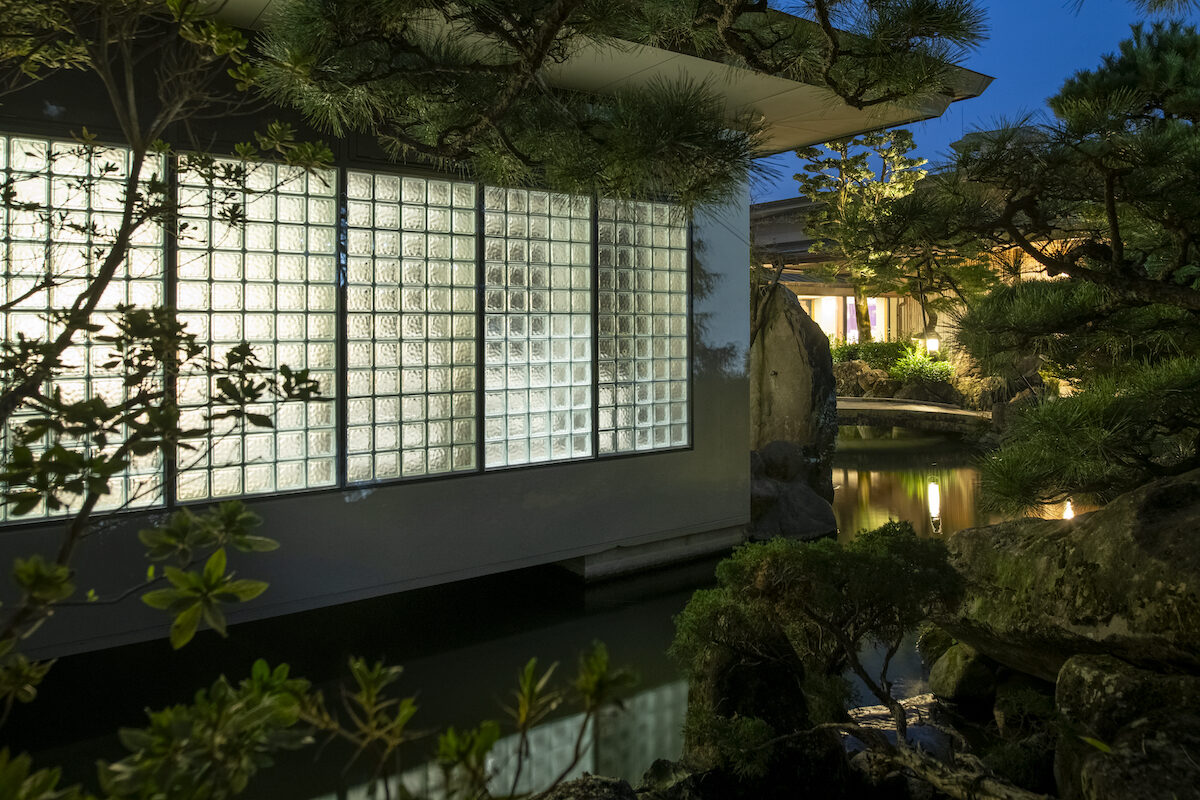
Soft light filters through glass blocks onto lime-green quartz stone. Steam rises like morning mist from a sleek silver pot—this is the design for Saga Hirakawaya, located within Wataya Besso in Ureshino Onsen, Saga, a tofu maker that has continued its craft for more than 70 years with roots in Saga. Wataya Besso, a ryokan in Ureshino Onsen, Saga, houses a variety of shops and restaurants and serves as a platform for showcasing local culture. This project began from a shared ambition: to disseminate tofu culture from Saga, a major soybean-producing region.
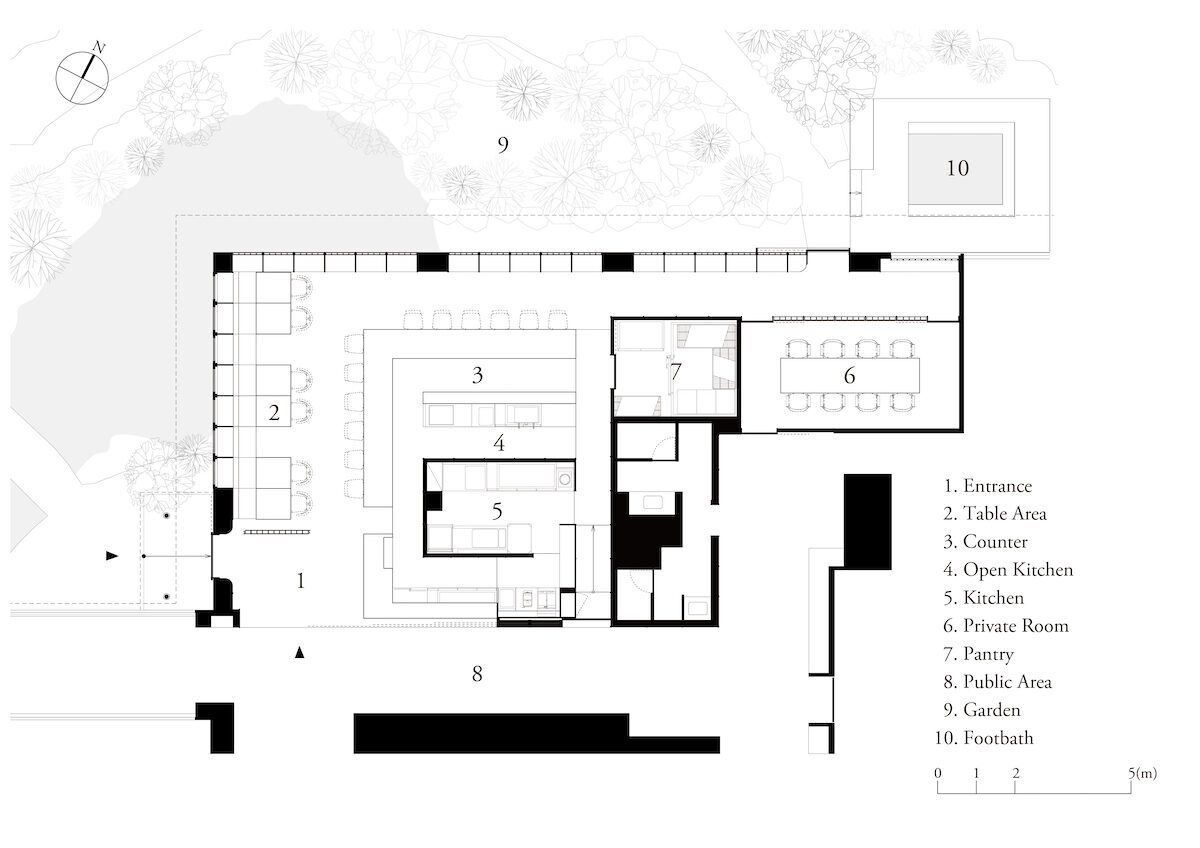
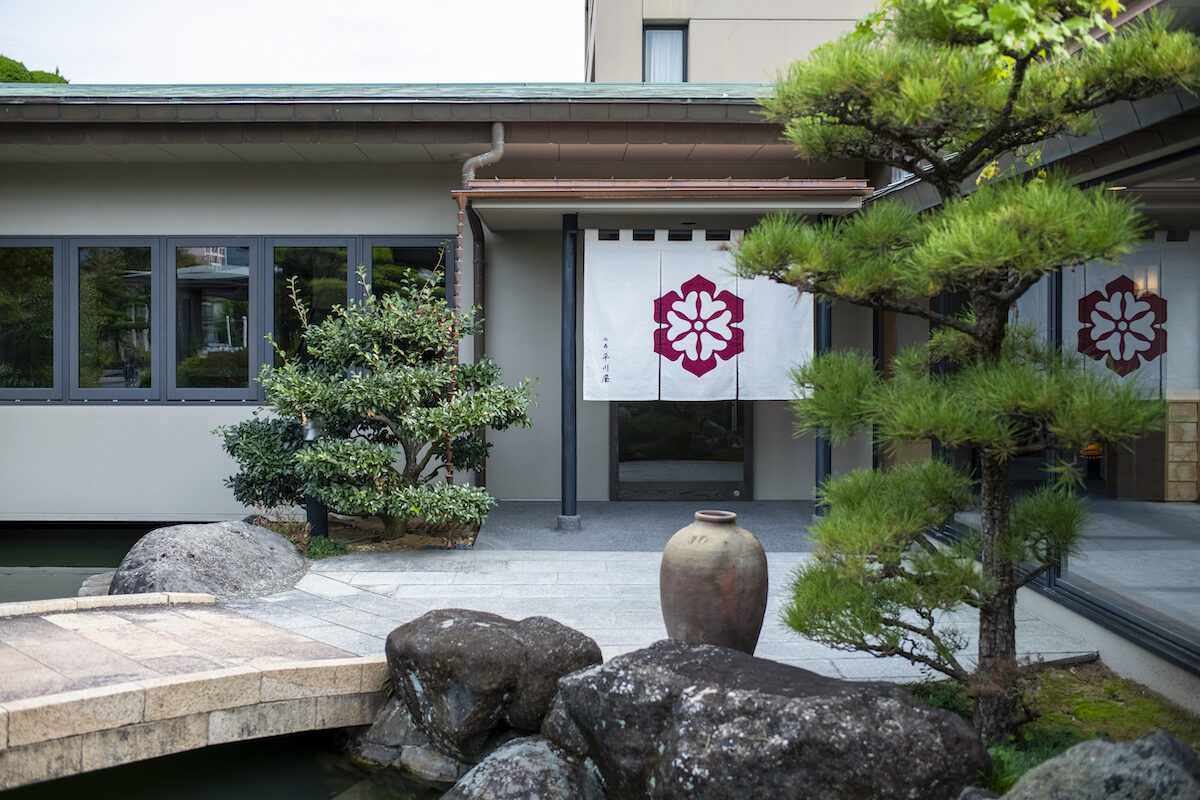
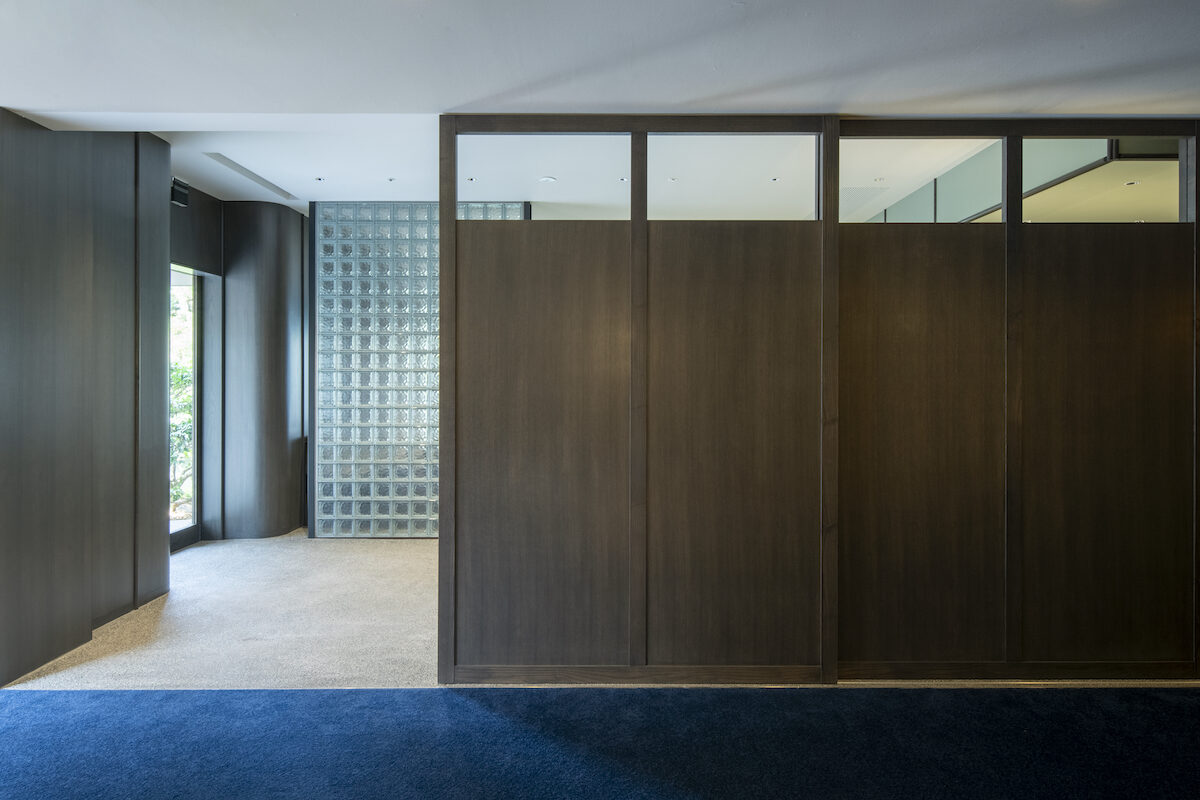
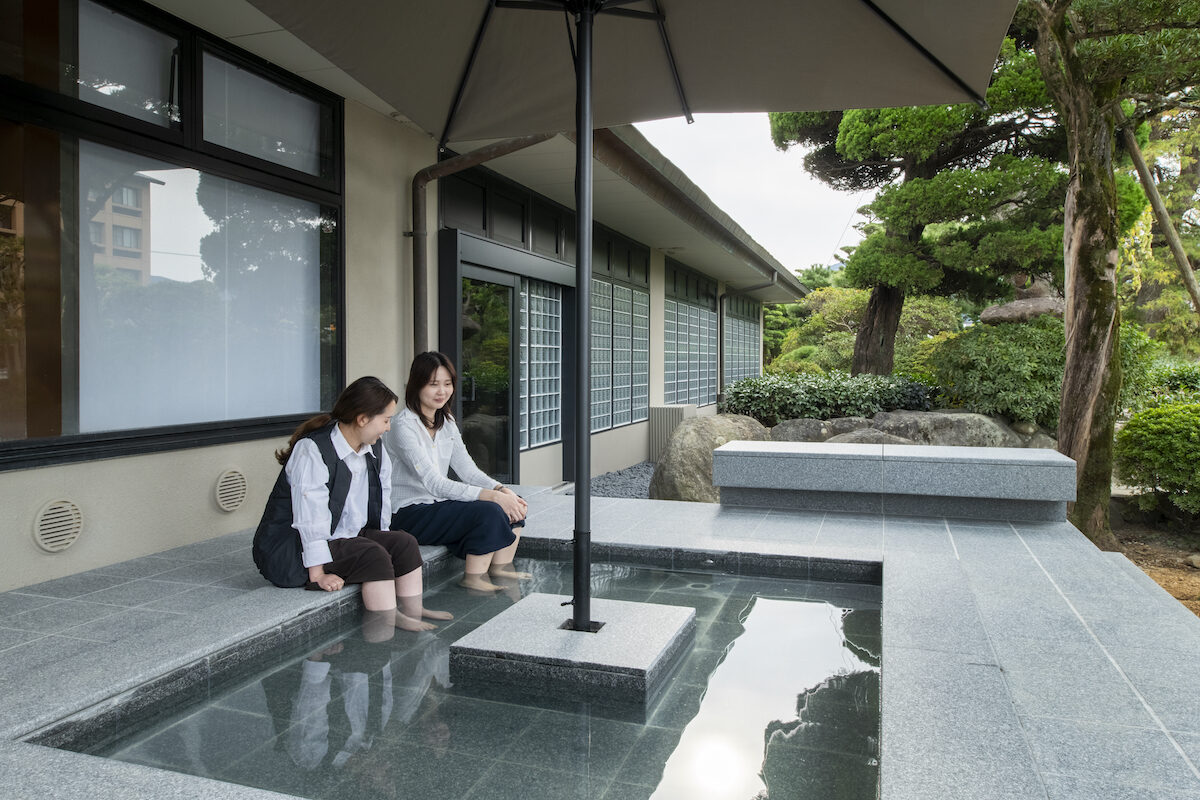
The shop occupies a corner of the ryokan’s East Wing. While the surroundings open onto the ryokan’s pond and gardens, views also include a parking area and neighboring buildings, making it essential to shape the relationship to the exterior while carefully controlling the outlook from within. On the interior side, the shop faces the ryokan’s communal circulation areas, so the goal was to block direct sight-lines from passing guests while avoiding a sense of separation between the ryokan and the store.
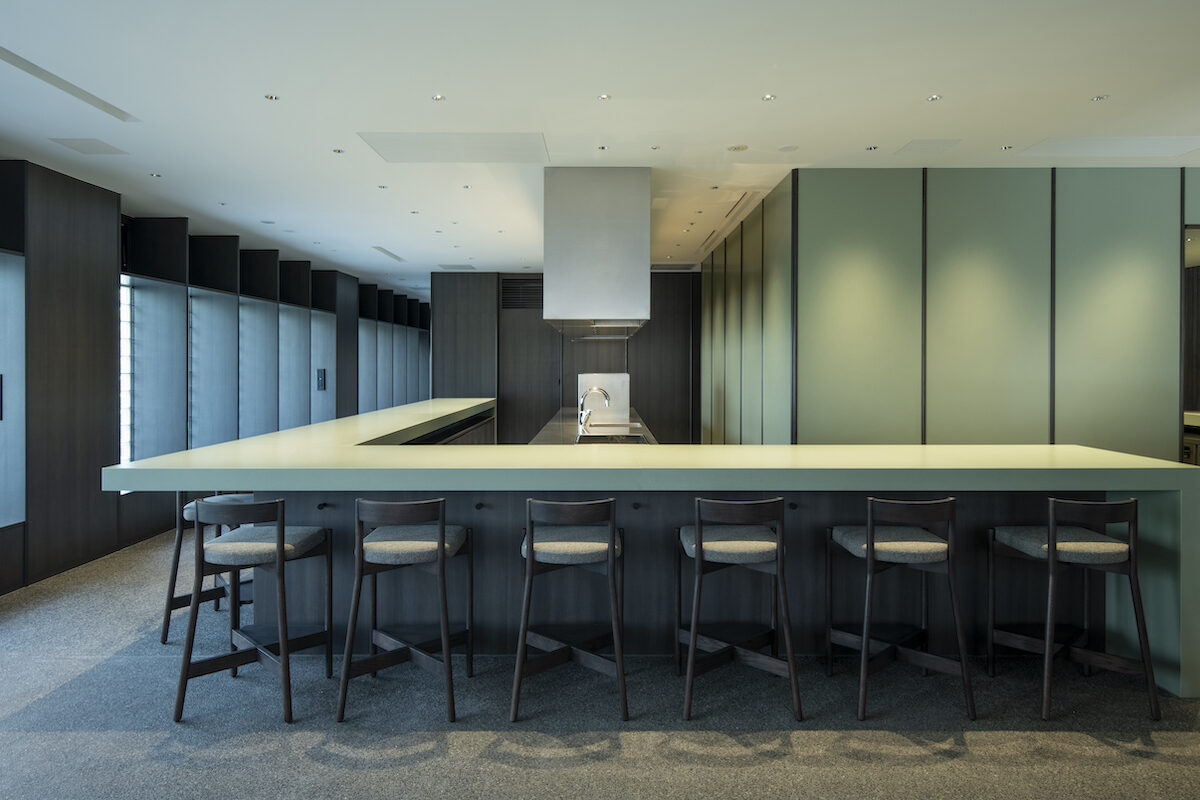
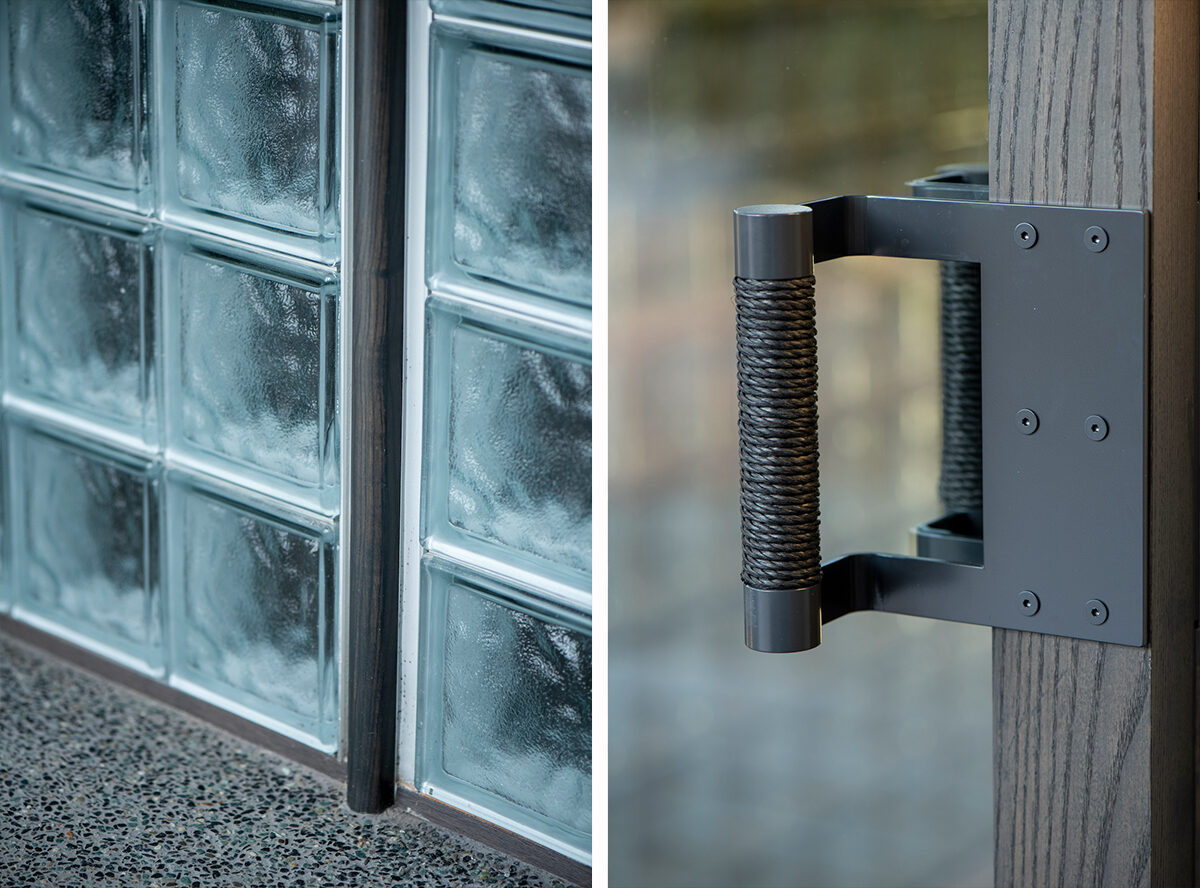
The key materials are glass blocks and lime-green quartz stone. The glass blocks admit daylight while softly blurring the scenery beyond. The greenery of the garden seen through the glass resonates with the lime green used on the counter and walls, conceived to harmonize in contrast with the white of tofu.
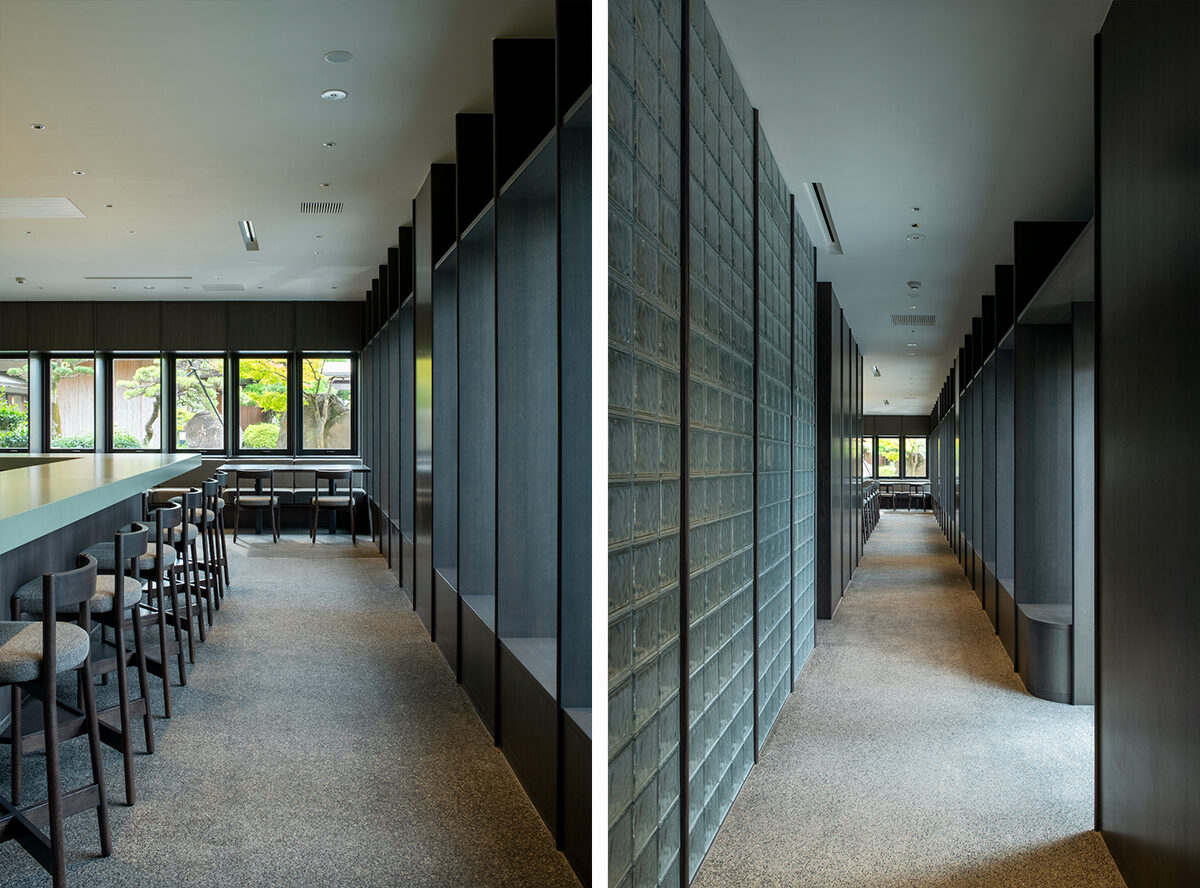
Another defining characteristic of glass block construction is that its module is determined by unit dimensions. Rather than treating this as a constraint, the design deploys it to create rhythm in the space. Along the exterior openings, successive wooden frame panels follow the block module, establishing a continuous atmosphere between inside and out. Smoke-vent windows were required above these openings; giving the panels depth also helped minimize the visual presence of these elements.
In addition, semi-circular trim pieces are used at regular intervals on the partition wall enclosing a private room made of glass blocks, as well as on the quartz stone and wood-clad walls. Even as finishes change, maintaining a consistent module leverages the specific qualities of each material and brings coherence to the overall space through its detailing.
Client: Saga Hirakawaya
Type of Project: Interior
Use: Tofu Restaurant
Period: Oct 2024 – Oct 2025
Floor Area: 138.711m2
Location: Saga, Japan
Design: Koichi Futatsumata, Yukino Kojima (CASE-REAL)
Design Partner: Tomoaki Munekata (design office TERMINAL)
Creative Direction: Katata Yoshihito (KATATA YOSHIHITO DESIGN)
Contraction: GRACE
Lighting Design: ModuleX
Manufacture of Furniture: E&Y
Photo: Hiroshi Mizusaki